Program At90s2313 With Arduino Microcontroller
AVR ATtiny USB Tutorial Part 2 Code and Life. This is the second part of my USB tutorial for ATtiny. V USB library. In the first part we learned how to get 3. V from USB to power our circuits. In this part, we will expand our setup with following parts Larger breadboard and additional jumper wires. ATtiny. 23. 13. 12 MHz crystal oscillator. Two 2. 7 p. F ceramic capacitors to stabilize the crystal. Two 6. 8 resistors between USB data lines and the microcontroller pins. M pullup resistor for D and 1. D 6 pin header for programming the ATtiny and 4. Update Some people have noted that the setup Im using here runs ATtiny. MHz with only 3. 3. V VCC, which is outside the specified range frequencies over 1. Mhz require 4. 5. V or more. Ive never had any problems, and many others have succeeded with this setup, but if you encounter persistent problems, I suggest you to power the ATtiny. V of the USB line and use zener diodes on D and D lines to drop their voltage, as is done in my later tutorial with the ATtiny. Breadboard setup. Program At90s2313 With Arduino Microcontroller Projects' title='Program At90s2313 With Arduino Microcontroller Projects' />This time I will not walk you through every connection. Instead, Ill just outline the steps needed and show the pictures of end result. Here is the schematic were building Basically its the regulator circuit we just built, pullups and line resistors for D and D in the USB bus going to PD2 and PD3, and the ATtiny. RESET pullup and MISO, MOSI, SCK and RESET connected to the 6 pin programming header, and a 1. Program At90s2313 With Arduino Microcontroller Chip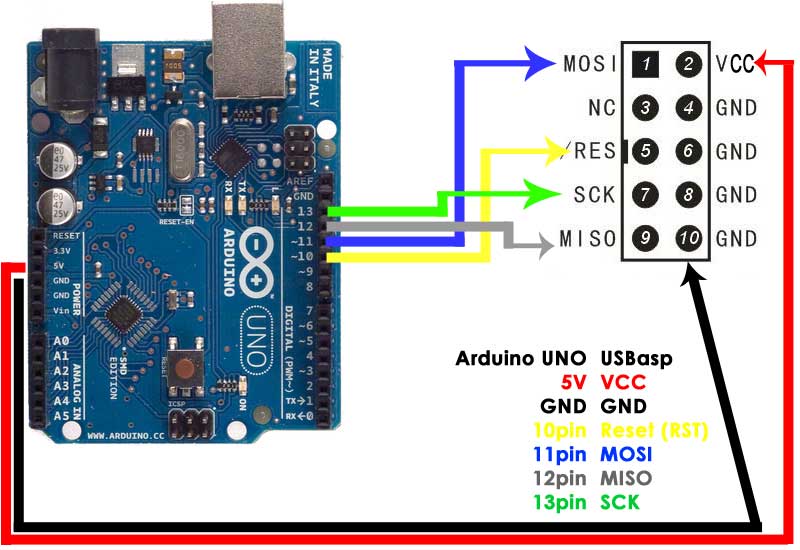 MHz crystal. An easy order to make these connections is to Reconstruct the power circuit from part 1 in one corner of the breadboard. Instead of connecting 5. USB InSystem Programmer ISP for Atmel AVR microcontrollers. Includes JTAG adapter. AVR USB Programmer Features Programmer powered by USB bus Conforms to USB power. Here we are presenting a long range FM transmitter that can cover a reasonable distance of 5 kilometers 3 miles and beyond with a one watt RF power with full. Atmel microcontrollers deliver easytouse embedded design solutions with low power consumption and high performance for a wide array of applications. B. Bitte newsde. newusers. Realnamensdiskussion nicht stndig mit falschen Behauptungen neu aufrollen. Official Atmel AVR development tools and evaluation kits contain a number of starter kits and debugging tools with support for most AVR devices. USB Voltmeter is a PC based dual channel voltmeter built around PIC18F2550 microcontroller that measures voltage from 0. V up to 500. 00V with 10mV resolution. Kup teraz na allegro. Programator USBasp AVR ISP ATMEGA8 ATMEGA128 Tama 6702565401. Allegro. pl Rado zakupw i bezpieczestwo dziki. Introduction. The latest version of this document is always available from http The AVR Libc package provides a subset of the. V from USB to the positive power rail, connect it straight to the input pin of the regulator we wont be needing 5. V anywhere else. Use jumper wires to connect regulator output and shared ground from USB to breadboard power rail. If you have multiple power rails, you can use jumper wires to provide current to all of them. Double check the regulator pin connections and that capacitors are connected the right way. Plug in the USB and use a multimeter to check you have 3. V in power rails. Insert the ATtiny and do standard wiring for power, reset pullup and 6 pin programming header. If your programmer has a mode where it provides power to the chip disable it. Use programmer to check that the chip responds OK i. Connect the LED to PB0 and do a test run flash a program that blinks the LED to see that it works. Connect pullup resistors to D and D 1. M and 1k. 5Connect D and D to PD2 and PD3, respectively use 6. Splitsvilla 9 Episode 12 Voot. Connect the 1. 2 MHz crystal to PA1 and PA0, and ceramic capacitors between crystal pins and ground. Heres how the end result should look like Here is another closeup of the power part and USB jumpers. Note how 5. V from USB goes to regulator only and nowhere else. By the way, if you need a refresher on how to connect the RESET pullup and 6 pin header and use the programmer, check out this excellent tutorial wiring is the same but of course pin locations in ATtiny. ATtiny. 45. Connecting the crystal is also very easy, just connect the two legs of the crystal to PA0 and PA1, and add ceramic capacitors between each leg and ground they need to be close to the crystal to make it stable. Software side preparing for V USBNow for the good stuff If you did not already test that your ATtiny. I suggest you to do that now. A good way to do it is to use the following simple test program. FCPU 1. 00. 00. 00. UL 1 MHz. include lt utildelay. DDRB 1 LED on PB0. PORTB 1 Turn LED on. PORTB 1 Turn LED off. This test program has the great additional feature that once we update the fuse bits for 1. MHz clock, its easy to verify that blink gets 1. Now for ATtiny. 23. MHz clock with 1. CLKSEL1. 11. 1, SUT1. This means that low fuse should be 0x. Microphone Array System Software. EF, which is done using avrdude command U lfuse w 0xef m without quotes. In case you are using any other part or just want to check it yourself, use the excellent AVR Fuse Calculator. Once you have updated the lfuse, reset or reprogram the chip to verify that the LED is now blinking 1. Update the blink examples FCPU to 1. L and reflash to verify that the blinking returns to 1 Hz speed. Congratulations, everything is now ready for the V USB part of the tutorial I will stop here for tonight, and post the third part of this tutorial shortly, covering the basic V USB setup for our circuit. Proceed to the next part of this tutorial. Build your own AVR JTAG ICE clone After unsuccessful attempts to run few programs who drive peripherals like USART and Timers on Atmega. I decided to make JTAG debugger. I hope it will allow me to see what is really happening is may atmega. The most widely used AVR JTAGICE clone is AVR mini. ICE which is compatible with original AVR JTAGICE. AVR JTAG mainly is used for target board debugging in real world. And of course you also can program your AVRs with it. To build this board is very ease as its schematic is simple AVRJtag. ICE Schematic. List of materials you will need Amount Type Title. R R1, R2. 1 1. 0K R3. C7, C8. 6 1. 00n C1,C2,C3,C4,C5,C6. LED G D1. 1 LED R D2. ATmega. 16. L DD1. MAX3. 23. 2 DD2. MHz Q1. All secret in its firmware, but dont worry it is ready to go. Vpn Access Manager Keygen. AVR Mini. ICE has following properties Is compatible with AVR JTAG ICE It is capable to debug and program Atmega microcontrollers with JTAG interface Real time debugging support Regular updates of firmware to support new types of AVR Updates can be done directly from AVR Studio Power supply from 2. V Connects to AVR Studio through COM port Two LED indicators Power and Connect. Now AVR studio 4 supports following AVR MCUs may be already new ones included ATmega. ATmega. 12. 8L, AT9. CAN1. 28. ATmega. ATmega. 16. LATmega. ATmega. 16. 2L, ATmega. VATmega. 16. 5, ATmega. VATmega. 16. 9, ATmega. L, ATmega. 16. 9VATmega. ATmega. 32. LATmega. ATmega. 32. 3LATmega. ATmega. 64. LHow to set up this adapter to be ready. Main thin is that you have to upload the firmware to it. For this you will need ISP programmer. First of all you will need to upload a Bootloader or Alternative bootloader to Atmega. AVR Studio directory. When bootloader is programmed program fuses like this Using Pony. Prog Then connect AVR mini. Ice cable to PC COM port and start AVR Studio. In AVR Studio Tools menu locate AVR Prog. And browse for file upgrade. AVR Studio directory by default in C Program FilesAtmelAVR ToolsJTAGICEUpgrade. After AVR is programmed usually you will get som error message dont care about it, you can program AVR fuses to its previous state in order to disable bootloading This is it. You have done. If you did it correctly it should work. Here is my prototyping view As I mentioned, AVR Mini. ICE can be used as AVR programmer as well. Goto Tools Program AVR. Then select AVR programmer JTAG ICE and desired COM port. After this you will be directed to JTAG ICE dialog window where you can program you target AVR How to start debugging will be in following articles. Download Another AVRICE project with SCH and PCB files as images.